
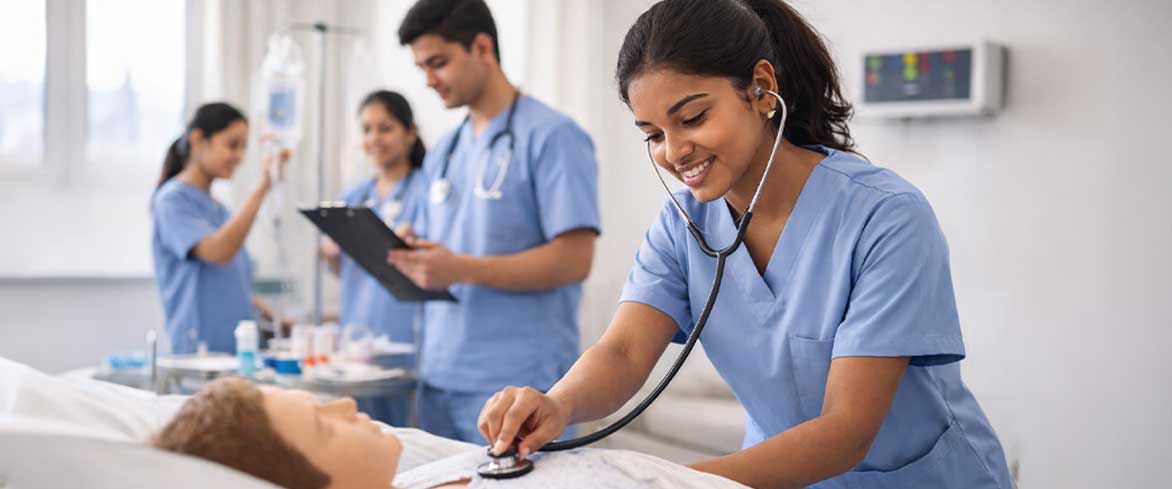
General Nursing and Midwifery (GNM) training is designed to prepare students for the real-world demands of patient care. It blends theoretical knowledge with extensive hands-on clinical exposure, enabling aspiring nurses to develop a wide range of practical skills essential in hospitals, clinics and community health settings. These clinical skills boost nursing competence and ensure safe, effective and compassionate healthcare delivery.
One of the most fundamental skills developed during GNM training is patient assessment. Students learn how to monitor vital signs such as temperature, pulse, respiration and blood pressure, as well as assess pain levels, consciousness and overall physical condition. This skill is crucial because early identification of abnormalities can prevent complications and guide timely medical interventions.
Another key area is medication administration. GNM trainees are taught the principles of safe drug delivery, including dosage calculation, routes of administration (oral, intravenous, intramuscular, subcutaneous) and maintaining medication records. Understanding pharmacology basics and adhering to safety protocols reduces the risk of medication errors substantially.
Wound care and dressing techniques are also integral components of GNM clinical training. Students gain hands-on experience in cleaning wounds, applying sterile dressings, managing surgical sites and preventing infections. This skill is particularly important in surgical wards, emergency units and community healthcare environments where wound management is routine.
This apart, GNM programmes place strong emphasis on infection control practices. Trainees learn proper hand hygiene, sterilisation methods, use of personal protective equipment (PPE) and biomedical waste disposal. These practices not only protect patients but also safeguard healthcare workers from hospital-acquired infections and cross-contamination.
Basic life support (BLS) and emergency response skills are another vital aspect of clinical training. Students are trained in cardiopulmonary resuscitation (CPR), airway management, first aid and recognising medical emergencies such as shock, seizures or cardiac arrest.
In addition to technical abilities, GNM training nurtures communication and interpersonal skills. Nurses interact with patients from diverse backgrounds, explain procedures, provide emotional support and coordinate with doctors and healthcare teams. Effective communication improves patient compliance, reduces anxiety and enhances overall care quality.
Maternal and child health skills are also imparted, especially in midwifery postings. Students learn antenatal assessment, labour room assistance, newborn care, breastfeeding guidance and postnatal monitoring. These skills are invaluable in maternity wards and rural healthcare settings.
In addition to all these, GNM trainees develop documentation and record-keeping skills, learning how to maintain accurate patient charts, nursing notes and discharge summaries. Proper documentation ensures continuity of care and serves as a legal and professional safeguard.
Overall, clinical skills developed during GNM training go far beyond routine procedures. They instil confidence, critical thinking, ethical responsibility and a patient-centred approach. The course makes students technically proficient as well as emotionally prepared to handle the challenges of the healthcare profession.